Merge idle games look like puzzles and behave like economies. Two matching items combine into one better item, better items produce more, and a board that fills with unmergeable junk ends the run. The reason boards fill is not bad luck — it is arithmetic, and the arithmetic is worth understanding before you blame the spawn rate.
The cost of a tier
In a standard merge-two economy, reaching tier n consumes 2^(n-1) tier-1 items:
| Target tier | Tier-1 items required |
|---|---|
| 2 | 2 |
| 3 | 4 |
| 5 | 16 |
| 8 | 128 |
| 10 | 512 |
| 12 | 2,048 |
Meanwhile the value of a tier typically doubles too — which sounds like it cancels out, and often it very nearly does. A tier-10 item that produces exactly 512 times a tier-1 item is economically identical to holding 512 tier-1 items, except for one thing: it occupies one slot instead of 512.
That is the actual product a merge game sells you. Merging does not multiply your wealth. It compresses your wealth into fewer slots so you have room to accept new spawns. Any merge economy that scales value faster than 2x per tier is generous; anything slower is asking you to merge purely for space.
Why boards deadlock
A merge board deadlocks when every free slot is gone and no two remaining items match. Three habits cause it:
- Merging greedily on arrival. Combining every pair the instant it appears leaves you with a spread of odd, unmatched tiers — one of each, none pairable.
- Keeping singletons “for later.” A lone tier-6 with no partner is 512 tier-1 items of value doing nothing but occupying a slot. It is only worth holding if the spawn table can still produce its partner.
- Ignoring the spawn ceiling. Most merge games only spawn low tiers. If the game spawns tier 1 and 2 only, every high tier you hold is permanently unpairable unless you build its partner from scratch — which costs another 2^(n-1) spawns.
The counter-habit is pair-first merging: before merging a pair, check whether the result will have a partner or a partner-in-progress. If it will not, consider leaving the pair unmerged until you have a second pair queued, so the merge cascades instead of stranding a singleton.
Cascades are where the value is
The reason experienced merge players hold pairs is the cascade. If you have two tier-1 pairs on the board, merging both gives two tier-2s, which merge into one tier-3 — a chain that consumed four slots and returned one. Merging the pairs at different times gives you a tier-2 sitting alone while you wait, occupying a slot the whole time.
Slot-time is the resource nobody tracks. A slot held for ten minutes by an unmergeable item is ten minutes of spawns you could not accept.
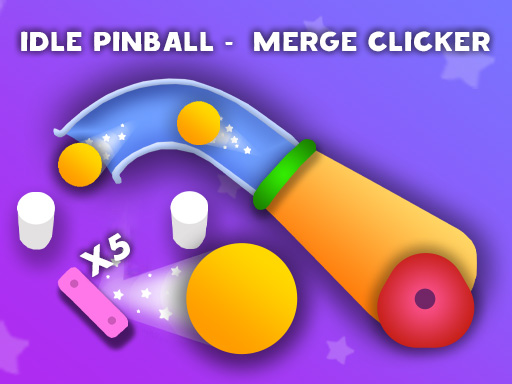
Idle PinBall - Merge Clicker is a clean example of the shape: the goal is combining elements into new combinations to earn money and increase passive income, unlocking levels, bonuses, and improvements as you go. Because the merge output feeds passive income rather than a score, holding a stranded high tier costs you continuously, not just at the end.
Drop-placement merge is a different game
Not every merge game gives you a free grid. Some drop items from the top and let you steer them left or right before they fall, so merges happen by collision rather than by selection. Magic Forest - Merge the Secrets works this way — a new item appears each turn, you move it with the cursor or your finger, and it merges when it lands against a match.
Physics-driven merging changes the optimal habit completely:
- Sort by size across the board. Keep large items low and to one side so small items can reach each other without being blocked.
- Never drop into a gap you cannot reach again. An item wedged behind two larger ones is functionally deleted.
- Accept a bad merge to clear a blocker. In a drop game, position is worth more than tier, because an unreachable high tier is worse than a reachable low one.
The game also gives you an out when space runs low — Masha will come and take items she asks for, or you can keep going alone. Treat that as an intentional pressure valve, not a failure state, and hand over the stranded singletons rather than anything with a partner still on the board.
Merging as one economy among several
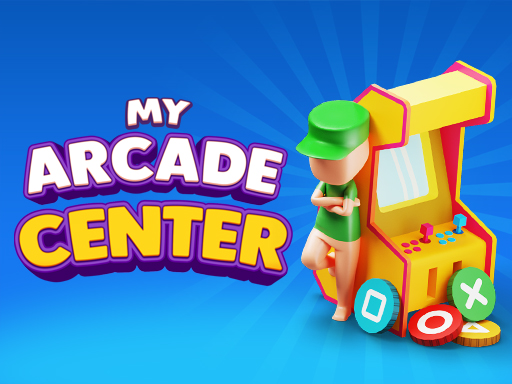
Larger idle games use merging as one lever alongside layout and staffing. My Arcade Center runs a day/night split — earn tokens by day, upgrade machines by night — while you hire staff, use coin bots, handle freeloaders and vandals, and optimise layouts across nine handcrafted maps. The upgrade decision there is not just “which machine is highest tier” but “which machine is placed where customers actually walk.”
That is the general lesson. In a pure merge board, tier is everything. The moment a game adds placement, throughput, or a second resource, tier becomes one input among several — and the player who tracks slot-time and position beats the one who only chases the biggest number.
More games with this loop sit in the clicker category.